Case study
GetTheDomain
Bulk domain availability checker with AI name generation. Solo build; a four-step verification cascade cuts paid API spend by roughly 90%.
- Laravel 13
- Octane (FrankenPHP)
- PostgreSQL
- Redis
- React 19
- TypeScript
- Tailwind v4
- Shadcn
- Inertia.js
- Filament v5
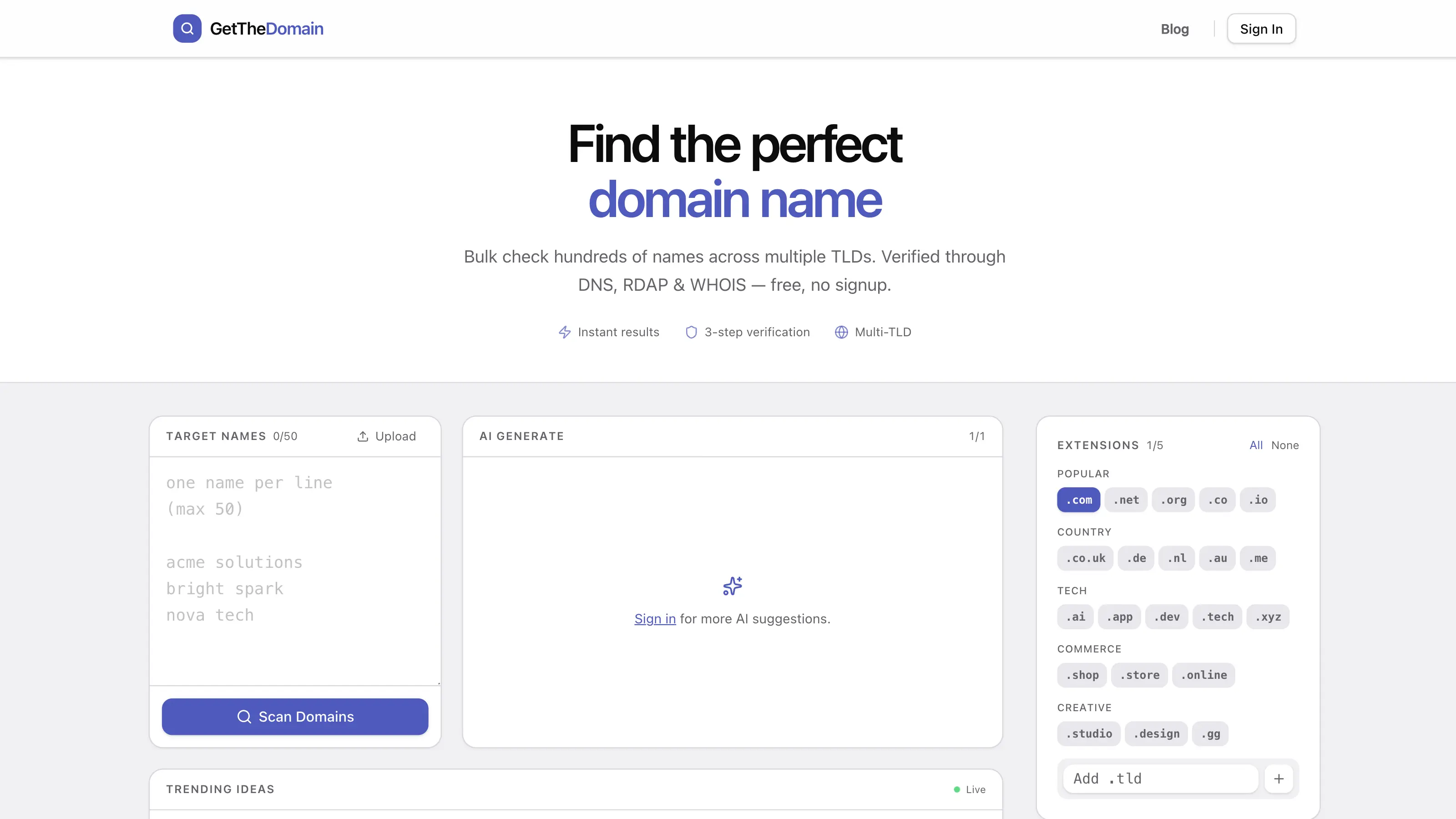
What it is
A bulk domain availability tool with AI-generated name suggestions. End-to-end solo build, from infrastructure to UI to the automated SEO content pipeline.
How it works
The verification pipeline runs four steps in order, escalating cost only when needed:
- DNS
- RDAP
- WHOIS over raw TCP/43
- DomScan API
Free sources exhaust first; the paid API only kicks in for ambiguous results. Net effect on cost: roughly 90% lower than naive paid-API-only checks.
Streaming results land in the UI over Server-Sent Events with per-row loading, error, and available states.
Stack notes
- Laravel 13 on Octane (FrankenPHP) with PostgreSQL and Redis.
- React 19 + TypeScript + Tailwind v4 + Shadcn delivered via Inertia.js v3.
- AI name generation via Cerebras and Groq running Llama 3.3 70B with automatic failover.
- Filament v5 admin with dashboard widgets for search volume, TLD popularity, and top-demanded domains.
SEO content pipeline
A scheduled Laravel command publishes two articles per day, fully automated. Copy via Claude API, on-brand imagery via fal.ai MCP. Marginal cost per article (Claude tokens plus one generated image) lands around $0.04; hosting and scheduling run on the app's existing infrastructure, so they add nothing on top.
What I'd change
The DomScan dependency is the cost ceiling. Next iteration replaces it with a self-hosted check service for the last-mile cases.